Our Research

Home » Our Research » Page 5
Could sheep hold the key to unlocking Alzheimer’s?

Could sheep hold the key to unlocking Alzheimer’s?

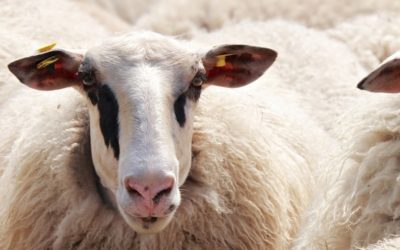
“Our animal models wander around in paddocks, eat grass, and are well cared for. In many ways, they’re just normal sheep,” says BRNZ Principal Investigator, Prof. Russell Snell. But those sheep are special, because they’re helping Russell and his colleagues at the...
Creating Connections at Te Matatini 2019

Creating Connections at Te Matatini 2019

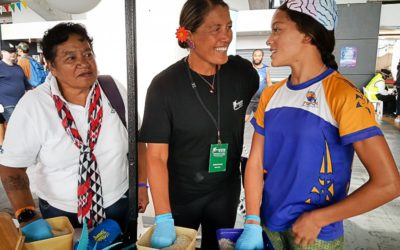
From the very beginning of Brain Research New Zealand – Rangahau Roro Aotearoa (BRNZ), it has been our aim to partner with Māori to help improve Māori health outcomes and to support the development of a thriving Māori neuroscience and healthcare workforce. Engaging...

BRNZ Releases Poster for Te Wiki o Te Reo Māori

BRNZ Releases Poster for Te Wiki o Te Reo Māori

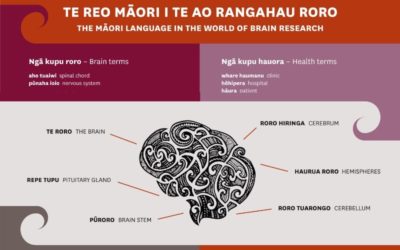
The theme of 2018's Wiki o Te Reo Māori is "Kia kaha te Reo Māori", let's make the Māori language strong! One of Brain Research New Zealand's key strategic goals is to partner with Māori in a meaningful way. To do this - and to play our little part in making the Māori...

BRNZ presents film segment for ‘Every Three Seconds’

BRNZ presents film segment for ‘Every Three Seconds’

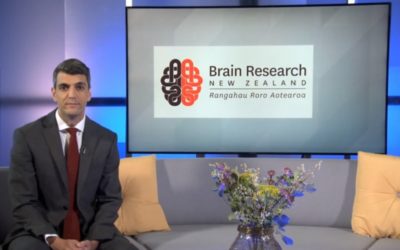
We proudly present Brain Research New Zealand’s contribution to ‘Every Three Seconds’, a news and current affairs style programme that explores the risks, growth and future response to dementia. It tells the stories of those who are impacted by dementia and those who...

BRNZ Researchers Receive Funding Boost from HRC

BRNZ Researchers Receive Funding Boost from HRC

As part of its annual funding round, the Health Research Council of New Zealand (HRC) has just awarded $55.56 million to 49 projects with the potential to improve the health of New Zealanders. The projects span across public health, biomedical research, Māori and...

Ultrasound As A Non-invasive Treatment For Alzheimer’s Disease?

Ultrasound As A Non-invasive Treatment For Alzheimer’s Disease?

Alzheimer’s disease accounts for more than 60% of all dementia cases, and as our population ages it is becoming an even greater societal issue. Huge progress has been made since the identification of Alzheimer’s disease in 1907, however drug trials continue to fail....

LiLACS – With Professor Ngaire Kerse

LiLACS – With Professor Ngaire Kerse

Now, more than ever before, people are living well into their eighties and nineties. “When I was a girl no one knew anyone in their 90s,” visiting Professor Ngaire Kerse says, “and now I bet everyone in this room knows someone in their 90s.” Ngaire has come down from...

Mārama

Mārama

This article was originally published by the BHRC [http://www.otago.ac.nz/bhrc/news/otago624982.html] Mārama is a new viral vector and optogenetics platform founded by Dr Louise Parr-Brownlie and Dr Stephanie Hughes. The platform is funded and operated through Brain...

Addressing the Critical Lack of Research into Māori and Dementia

Addressing the Critical Lack of Research into Māori and Dementia

Dr Margaret Dudley (Te Rarawa, Te Aupōuri and Ngāti Kahu) is a clinical psychologist and researcher with BRNZ. In 2016 she was awarded over a million dollars by the Health Research Council to undertake a 48 month project to develop a Māori approach to the assessment...

Brain Week Interview with Stroke Expert – Dr Andrew Clarkson

Brain Week Interview with Stroke Expert – Dr Andrew Clarkson

This article was originally published by the BHRC [http://www.otago.ac.nz/bhrc/news/otago648060.html] Stroke is one of the leading cause of death and disability the world over. Every year around fifteen million people worldwide will have a stroke. One third of those...